Inside-Out Alliance of Kansas, Inc.

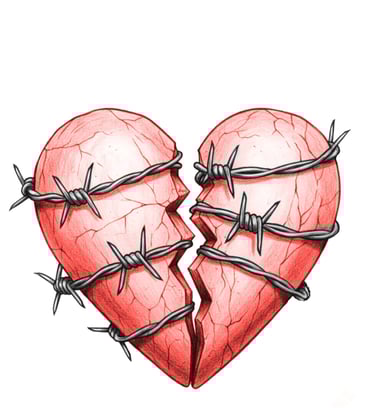
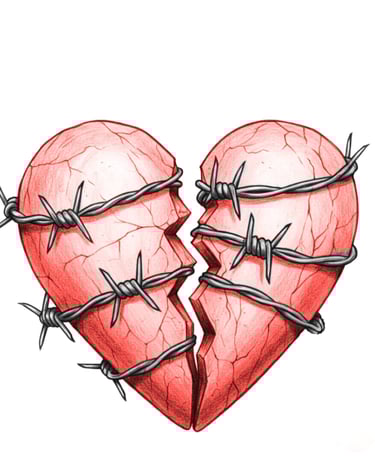
Losing a child to incarceration is a loss unlike any other. There are no comforting phone calls from friends, no warm casseroles left at your door, no offers of thoughts and prayers to sustain you. Instead, you are met with a deafening silence. Your pain is rarely acknowledged, nor is it socially acceptable.
To my fellow mothers of the incarcerated--the ones that find a way to breathe through relentless grief--never lose that resiliency, that unwavering love and advocacy for your child, despite the world’s apathy. Hold on to that refusal to surrender hope. I see your refusal to rest until your child is returned safely to you. I see you serving that invisible sentence alongside your child. Always remember that there is strength in our shared experiences, and you do not stand alone.
Dear Mothers..


The Library Between Seconds
by Laura Smith
There is a place that no map can show and no warden can guard. It lives in the space between two seconds—so thin that most people rush past it their entire lives and never notice.
One night, a man who had lost nearly everything sat alone in a small cell, staring at the cracks in the concrete. He had counted the days until numbers meant nothing. He had replayed his past until the memories burned like salt in an open wound. That night, he whispered into the darkness, not really expecting an answer: “There has to be more than this.” The air did not shimmer. No angel appeared. No miracle light filled the room.
Instead, something quieter happened.
The second hand—if he’d had a clock—would have ticked from one mark to the next. But halfway between those two marks, time paused. Just for him. Just for a breath so thin it wasn’t quite a breath at all. He blinked, and his cell… changed.
The walls were still there, but the space felt wrong, bigger than it should be. The corners stretched further away, like someone had taken reality and pulled it at the edges. In front of him stood a door that could not exist: old wood, iron hinges, and a handle worn smooth by hands that were not his. On the door, carved deep, were three words: ENTER IF READY.
He thought, This is just my mind playing tricks. But the cell was a cage, and the door was not. So he reached out and grabbed the handle.
The moment his hand touched it, he felt everything he had ever been—every mistake, every small kindness, every moment he wanted to forget—rush into the wood. The door seemed to weigh his soul like a scale. For a heartbeat, he was sure it would reject him. Instead, it opened.
On the other side was not a hallway. Not a yard. Not freedom as he expected it. It was a library. But no ordinary one. The ceiling arched so high it disappeared into a soft glow, like a sky made of memory. Shelves spiraled in impossible directions—up, down, sideways, even looping into themselves. Some books were ordinary, with titles on their spines. Others were made of light, or shadow, or something like mist trapped between covers.
He stepped through, and the door closed behind him. A figure waited at a table near the entrance. Not a guard. Not a judge. Just an old man with eyes that looked like they’d seen too many lifetimes. “Welcome,” the old man said. “This is the Library Between Seconds.” The man from the cell looked back at the door. “Where am I really?” “Everywhere you have been,” the old man replied, “and everywhere you might yet go.”
They walked together between the shelves. On one shelf, the man saw a book with his name on it. He pulled it out. It was heavier than it looked.
“What’s in here?” he asked. “Every choice you ever made,” said the old man. “Read if you like. But be warned—memory can be a prison, too.”
He opened the book to a random page. There he was, as a child, laughing at something so small no one else remembered. Another page: the first time he clenched his fist in anger and realized he liked the feeling of power. Another: the moment he could have walked away, but didn’t. The night that changed everything. The sirens. The faces.
His hands trembled. He closed the book. “I already know all this,” he said. “It just hurts.”The old man nodded. “Then put it back. You’ve served enough time inside that version of yourself.” They moved on. On another shelf, he noticed books with strange titles:
“Lives You Could Have Lived”
“Choices You Never Made”
“You, If You Had Forgiven Yourself Earlier”
“You, If You Never Changed At All
He hesitated. “Are these real?” “As real as anything else,” the old man said. “They are not predictions. They are possibilities. Every thought you have changes which shelf you walk toward.” He picked up one book: YOU, IF YOU NEVER CHANGED AT ALL. When he opened it, he saw a man older than himself, eyes empty, walking through a world that looked different but felt the same—chasing the same shadows, making the same mistakes in new places. The details shifted, but the pattern did not. He shut that book so fast dust rose from the pages. “I don’t want that one,” he whispered. “Good,” said the old man. “Most people never say that out loud.”
They climbed a staircase that didn’t seem to go up or down so much as sideways into somewhere else. At the top, there was a single table and one more book, lying open. Its pages were blank. “What’s this?” he asked. “That,” the old man said, “is the book that can still be written.”
“But I’m… where I am,” the man replied. “My story is already over.” The old man’s eyes softened, a little sad, a little amused. “Your body may be confined,” he said, “but your story is not a room. It is not a sentence on a piece of paper. It is not even the number of years they stamped on you. Your story lives where your next thought goes, and the one after that, and the one after that.” He tapped the blank page.
“Every time you decide to learn something new, to understand something deeper, to forgive a little piece of yourself or someone else, a line appears here. Every time you choose not to let bitterness be the only thing that grows in you, another line. The world may never see this book. But you will feel what’s written in it.”
The man stared at the empty pages. “But what’s the point,” he asked, “if I never walk out of that cell?” The old man took a long breath.
“If a man is caged, but his mind travels further than the guards, the judge, or the people who forgot him… who is really free?” The old man paused, his voice soft but clear: “Who is truly free, then?”
The library fell silent. Shelves full of lost possibilities watched him. He thought of all the people outside who lived like ghosts, never questioning, never looking deeper, never opening a single book inside themselves. He thought of how far his thoughts had traveled just since stepping through that impossible door. “I don’t feel free,” the man said. The old man nodded. “Feeling is one thing. Becoming is another. Both take time.”
He placed a pen beside the blank book. “You may not control how many steps your feet can take,” he said softly, “but you still control where your mind walks. You can walk in circles around your pain forever. Or you can walk into questions so deep that even the universe hasn’t answered them yet.”
He leaned closer. “Why is there something instead of nothing?” he asked. “What if time is just a story your mind tells so you don’t see everything at once?” “What if the you ten years from now is watching you from the other side of this page, hoping you don’t give up?” The man’s chest ached, but not from despair this time—from a strange, sharp kind of hope. “Will I come back here?” he asked. The old man smiled.
“Every time you slip between two seconds,” he said. “Every time you close your eyes in that cell and refuse to let the walls be the only thing you see. The door is not in the concrete. It’s in your decision to keep imagining something bigger than your sentence.”
The shelves flickered. The air thinned. The Library Between Seconds began to fade. “Wait,” the man said. “What happens to the book if I stop trying?” The old man’s voice echoed as the world pulled away: “Then the pages stay blank. And you were always capable of more.”
The man opened his eyes. The 5x7 cell was back. Same walls. Same air. Same weight of years. But his breathing was slower. His heartbeat steadier. Because now, when he stared at the cracks in the wall, he knew that somewhere between one second and the next, a door could appear—if he chose to look for it.
He closed his eyes again, not to escape, but to walk. Back into the Library. Back to the shelves where his past didn’t have to be his future.
Back to the blank book, and the pen, and the possibility that even in a cage, a man could still write something no one could take from him:
A mind that refused to stop growing.
Written by a mother for her son, who is serving five life sentences:
Justice
by Nia Nichelle
This is my son. His name is Justice.
He took someone’s life.
That reality will never be watered down. A family lost someone they loved, and I respect their pain with every part of me.
But I have my own truth to tell.
Before Justice ever entered a physical prison, he grew up inside one I didn’t realize I was building with my own hands.
I was unstable.
I disciplined out of fear, not wisdom.
I repeated the same harm I grew up with and called it structure.
I loved him deeply, but I didn’t know how to raise a boy gently.
And anger became his language long before he found the words he actually needed.
That’s my accountability.
Justice didn’t come from nowhere.
He came from me.
He came from my wounds, my instability, my lessons learned too late, my attempts at mothering when I still needed mothering myself.
Now he’s in the kind of prison the world can see and that one isn’t rehabilitating him either.
He’s 21, but he’s still carrying the broken parts of the boy he was at 15 when they locked him up.
No therapy.
No real treatment.
Just time, survival, and access to things that make him worse, not better.
And this is the part that crushes me:
I can’t help him now.
Not in there.
Not in the ways he needs.
Not in the ways I wish I could go back and give him when he was small enough to save.
People talk about rehabilitation like it’s automatic.
But my son is not being rehabilitated.
He’s being contained.
I’m not saying any of this to make excuses for him.
Justice is accountable for what he did.
I’m accountable for the environment he grew up in.
And our whole family is accountable for the patterns we didn’t break soon enough.
I’m saying this because there are mothers living this same reality raising children while unhealed, trying hard but missing pieces they didn’t know they needed, and now carrying guilt so heavy they can barely breathe.
This is my truth.
This is Justice’s truth.
And if any part of this is yours too… you don’t have to pretend you’re okay.


It is vital to recognize the voices of inmates, but equally important is the need for their families to share their stories. In Kansas alone, nearly ten thousand families feel the weight of having a loved one behind bars. The toll on these families is profound and often beyond measure. They not only mourn the absence of their loved ones but also bear the heavy burden of stigma that comes with incarceration—feelings of guilt, shame, and a heartbreaking sense of social isolation.
Furthermore, the economic ramifications for these families can be crushing. The loss of wages, the expenses tied to supporting their incarcerated loved ones, and the financial strain just to maintain a connection often leave them teetering on the edge of survival. Tragically, it is the low-income and minority families who feel this burden most acutely, intensifying the deep-rooted inequalities that already exist in our society.
Your story and experiences hold immense value; they resonate with others and may illuminate the path for other families that are struggling. It is essential that society recognize that families of inmates are human beings deserving of empathy and understanding. Your story can help bridge the gap and help foster a sense of connection with others who feel alone in their struggles.
Please submit your posts to dian@ioaofks.org, or Inside-Out Alliance of Kansas, PO Box 156, Hutchinson, KS 67504-0156. Thank you!
Share your story!